

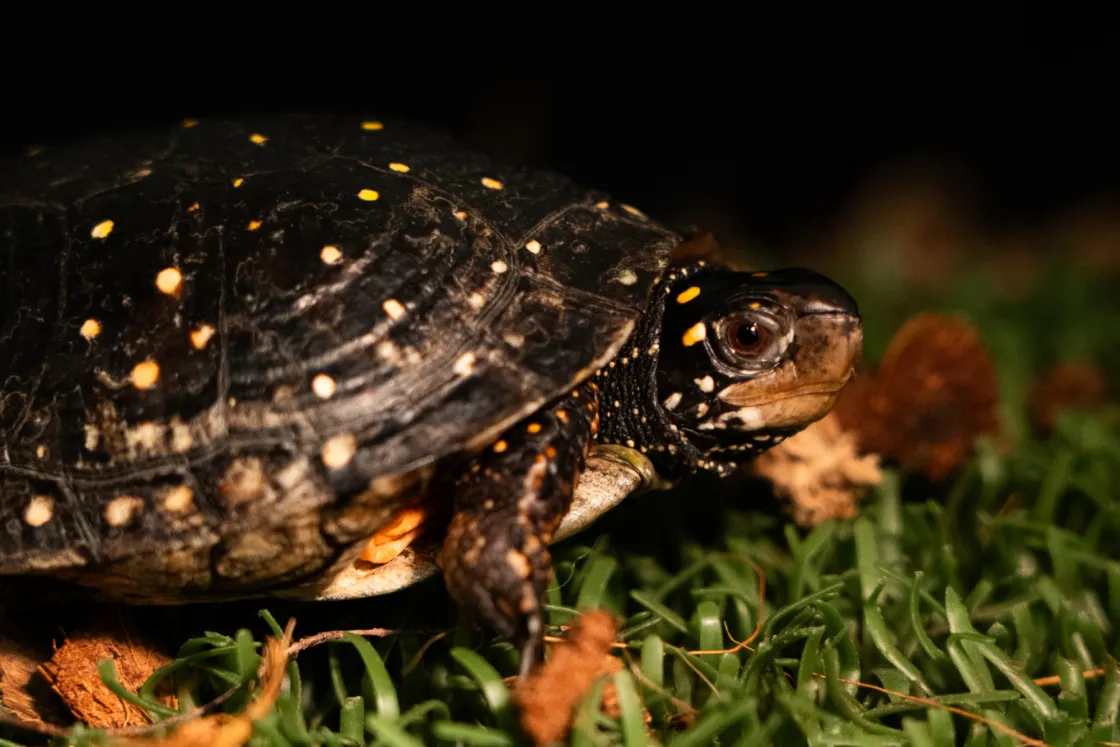
On June 26, 2024, the Wildlife Center admitted eight Spotted Turtles that had spent the past six years in captivity after being taken from the wild by traffickers. Thanks to genetic testing and the tireless work of many conservation organizations, the turtles are finally back home in the wild as of August 2024.
The turtles’ long journey began in 2018 when they were part of one of the largest wildlife confiscations in New York State history. They, along with nearly 300 other turtles, were found in a New York man’s home after an anonymous tip from a member of the public led to their seizure by state wildlife officials.
In total, 184 of the confiscated turtles were Spotted Turtles, a small aquatic turtle that gets its name from the yellow spots on its shell. The trafficker had intended to sell the turtles overseas in the illegal pet trade, a growing problem for many of North America’s native turtles – including Spotted Turtles. “They’re small, they’re showy, and they’re personable turtles,” making them highly desirable, said Virginia State Herpetologist JD Kleopfer.
Once the turtles were rescued, they were initially deemed non-releasable. The trafficker didn’t share where the turtles came from, or even when they were taken from the wild. Without this information, turtles often cannot be released; turtle survival depends on being within their home territory, and releasing them elsewhere could risk transmitting diseases to and from other turtle populations.
“A lot of times when people hear about these things—300 turtles were confiscated—the actual confiscation makes a lot of news, but the story kind of dies there,” Kleopfer said. “But that’s just the beginning for those animals. Then there’s this long, drawn-out process of holding the animals and trying to figure out what you’re going to do with them afterward.”
In most cases, confiscated turtles need to be placed in captivity if they can’t be released, but finding an appropriate facility with the space and enclosures to house them is challenging. Fortunately, AZA SAFE and the Turtle Survival Alliance stepped in to help and found suitable homes for the rescued turtles at zoos, aquariums, and other facilities around the country.
The ultimate goal, though, was still to repatriate these turtles to the wild, and a project started in 2018 was helping to do just that – through genetic testing on wild Spotted Turtles. Virginia State Herpetologist JD Kleopfer has been collaborating with wildlife biologists from 12 other states along the Eastern Seaboard to perform genetic testing on wild Spotted Turtles as part of the Status Assessment and Conservation Plan. The hope was that the biologists could create a “genetic map” which, when compared to the DNA of Spotted Turtles from confiscations, could reveal where the turtles came from.
When the group compared the DNA analysis of the turtles in the New York Confiscation to the genetic makeup of wild Spotted Turtles from various regions, they got a hit. The analysis revealed that eight of the Spotted Turtles came from a region in Central Virginia – an area that JD was familiar with and where he was confident they could be safely released.
With the release location identified, the turtles were brought to the Wildlife Center of Virginia to prepare to return to the wild. The Virginia Department of Wildlife Resources asked the Center to check if the turtles were clinically healthy, both in terms of their overall health and to assess them for any diseases they may be carrying.
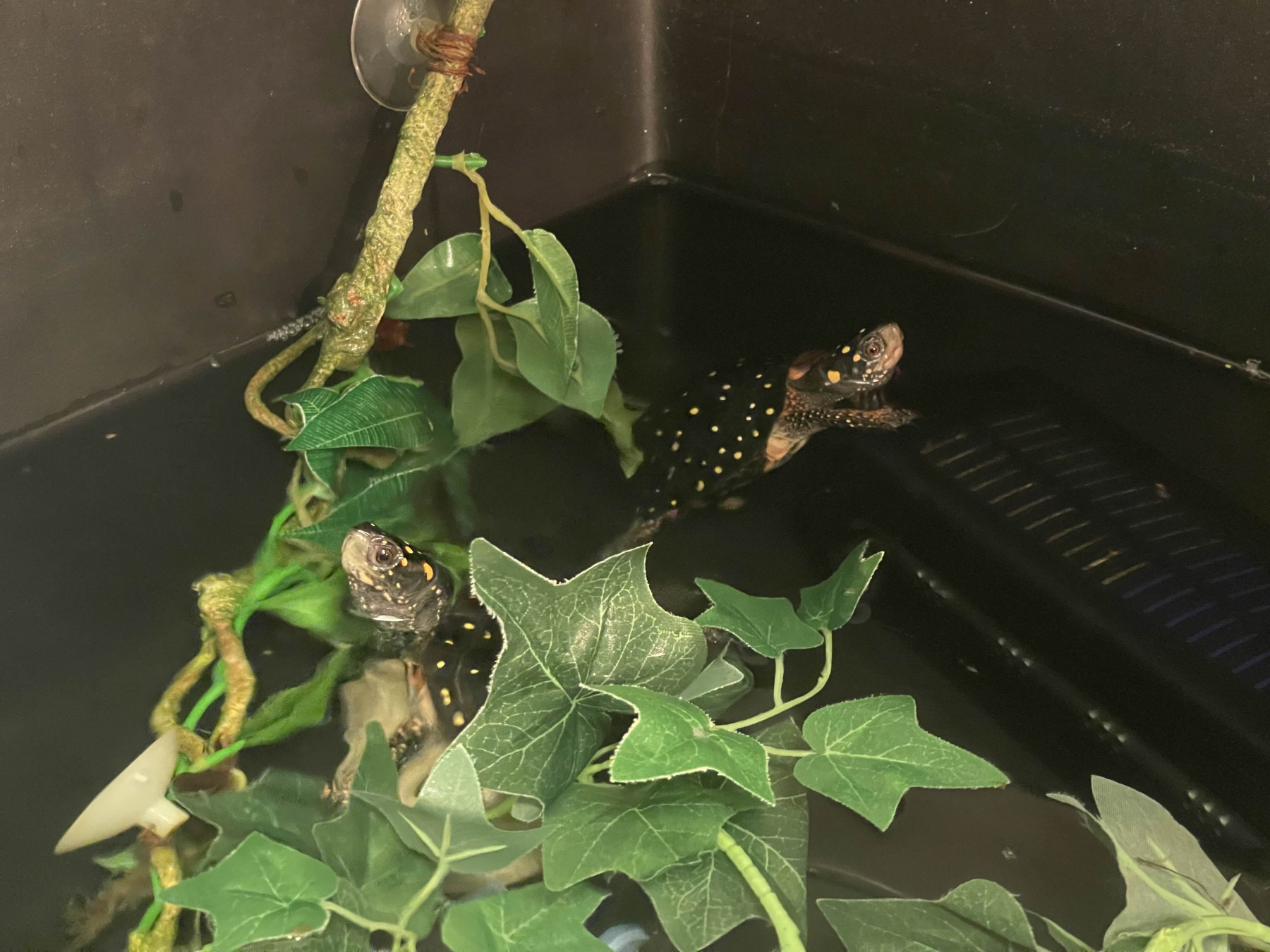 At their June 2024 admission, the Center’s veterinary team began a full examination of each turtle. “There are four diseases that we usually test for in turtles: Mycoplasma, Ranavirus, Adenovirus, and Herpes,” said Dr. Karra, the Center’s Director of Veterinary Services. “Even if turtles show no clinical signs, if they are carriers of these viruses, they could potentially spread them to other turtles in the wild, harming the population.”
Fortunately, all of the turtles tested negative for these diseases and were in overall good health. After two months of care in the Center’s Reptile Room, including daily feeding, water changes, and weekly checkups with the veterinary staff, the turtles got the final clearance for release and were picked up by JD Kleopfer to be transported home.
When JD released the turtles, he stayed to monitor them as they acclimated back to the wild. After 30 minutes, all the turtles had disappeared. He described it as a “melancholy” moment. While he was happy to see the turtles back home, he also thought of the other turtles from the confiscation. “There are so many turtles that were poached that didn’t make it back.”

But JD and all the organizations involved in making this release possible are hopeful that this is just the beginning and that with continued genetic testing and partnerships, one day many – maybe even all – of the turtles from this confiscation can return home. And in the future, this genetic testing may pave the way for other confiscated turtles to return to the wild too.
For more information about this story and the dedicated work to help these turtles return to the wild, check out the Department of Wildlife Resources blog post: Spotted Turtles Swim Off Into The Sunset | Virginia DWR.