

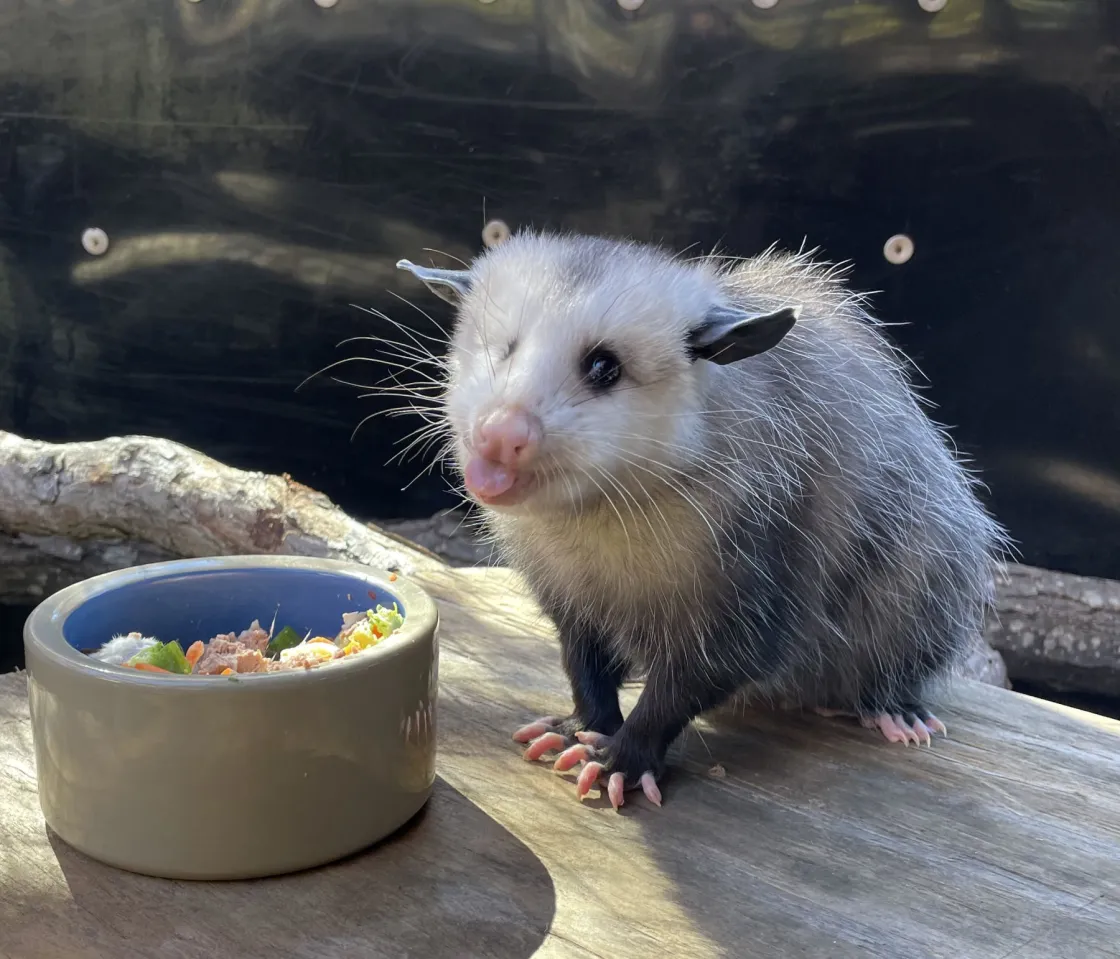
It’s time to look back on 2025! Check our blog between Christmas and New Year’s for a variety of stories and memories of 2025 from the staff of the Wildlife Center of Virginia.
It was mid-July when I received a call at the front desk about an injured juvenile opossum in Harrisonburg. She had been found lying in the grass with labored breathing and clearly needed medical attention. The caller explained that he had to work all day and couldn’t bring the animal to the Center himself, but another worker at the site volunteered to contain the opossum and meet me in Grottoes after work hours.
When I picked her up, I could hear her labored breathing coming from the box. I waited until I got home to peek inside. She was lying on her side, with her injured jaw facing upward, and my heart sank. She looked and sounded like she might not make it through the night. I made her as comfortable as I could in a quiet, dark room and planned to take her to the Center first thing in the morning.
Though small and fragile, the opossum was a fighter, and she was still alive in the morning. I immediately brought her to work, admitted her as a patient, and tried not to get my hopes up. The veterinary team assessed her and found she had multiple facial fractures, pale mucous membranes, a small wound on her head, and an injured right eye. The cause of the injuries was undetermined, but it was speculated that she was attacked by a predator.
As the first few days of her hospital stay progressed, I couldn’t resist checking her status in our patient logs, bracing myself each time. Her prognosis was considered poor, but each day she improved a little more. Then I heard the news: her right eye could not be healed; it would have to be removed, making release back into the wild impossible. I knew that humane euthanasia would be the only option if there was no opportunity for placement as an ambassador animal. We did have an opening for an ambassador opossum following beloved Oliver’s passing, but the process for assessing and approving an animal as an ambassador takes time. Not every non-releasable animal is appropriate for the role.
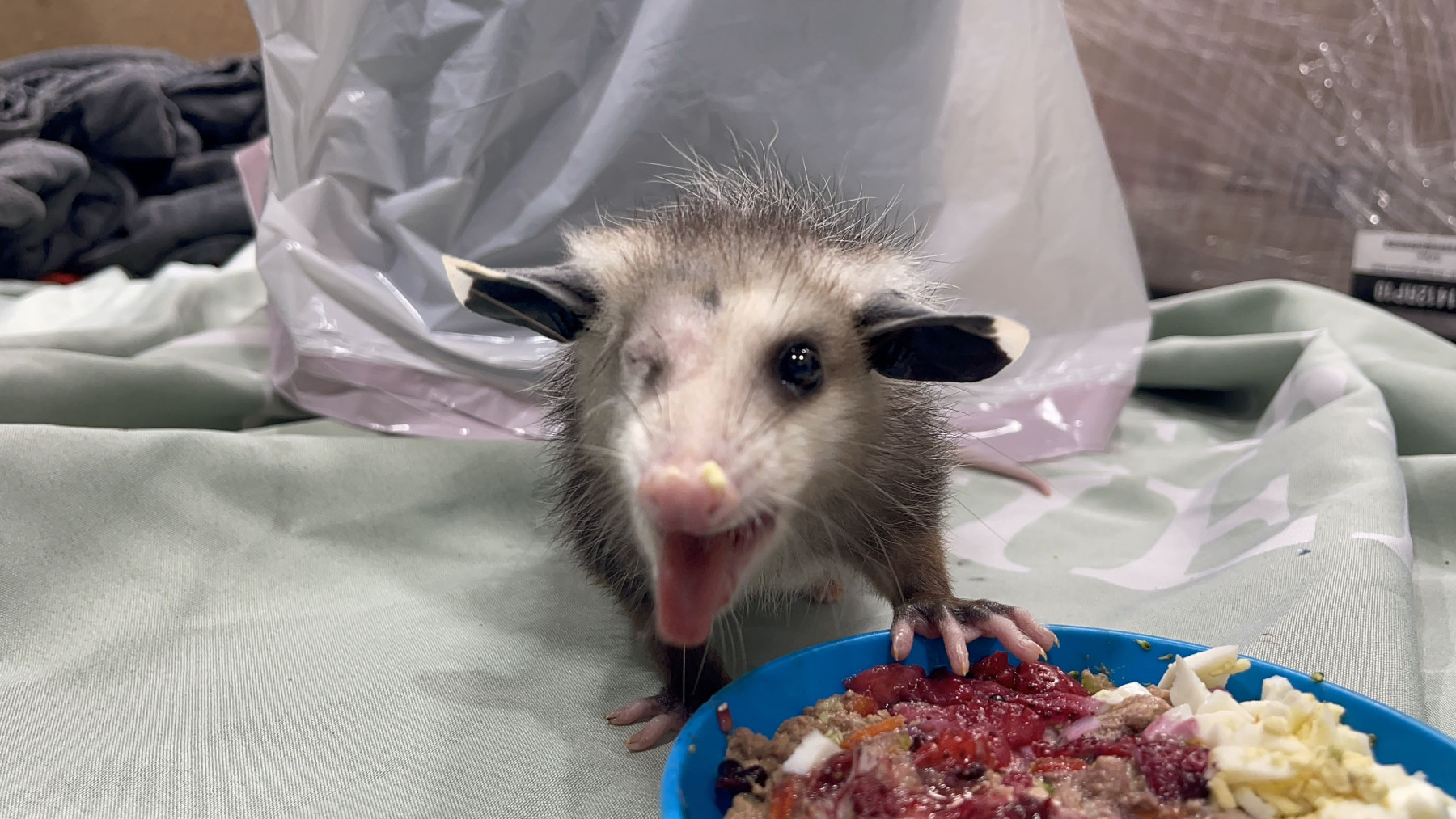 When I was told she was being considered as our new ambassador, I was elated. It was hard to believe that this little girl had survived that first night with such severe injuries, much less that she might one day stay on with us as an ambassador. After several weeks of careful observation and training, she officially joined the team and was introduced as our newest ambassador, just in time for our Annual Gala, where the right to name her was auctioned. She was named Lucy, in honor of the winner’s grandmother.
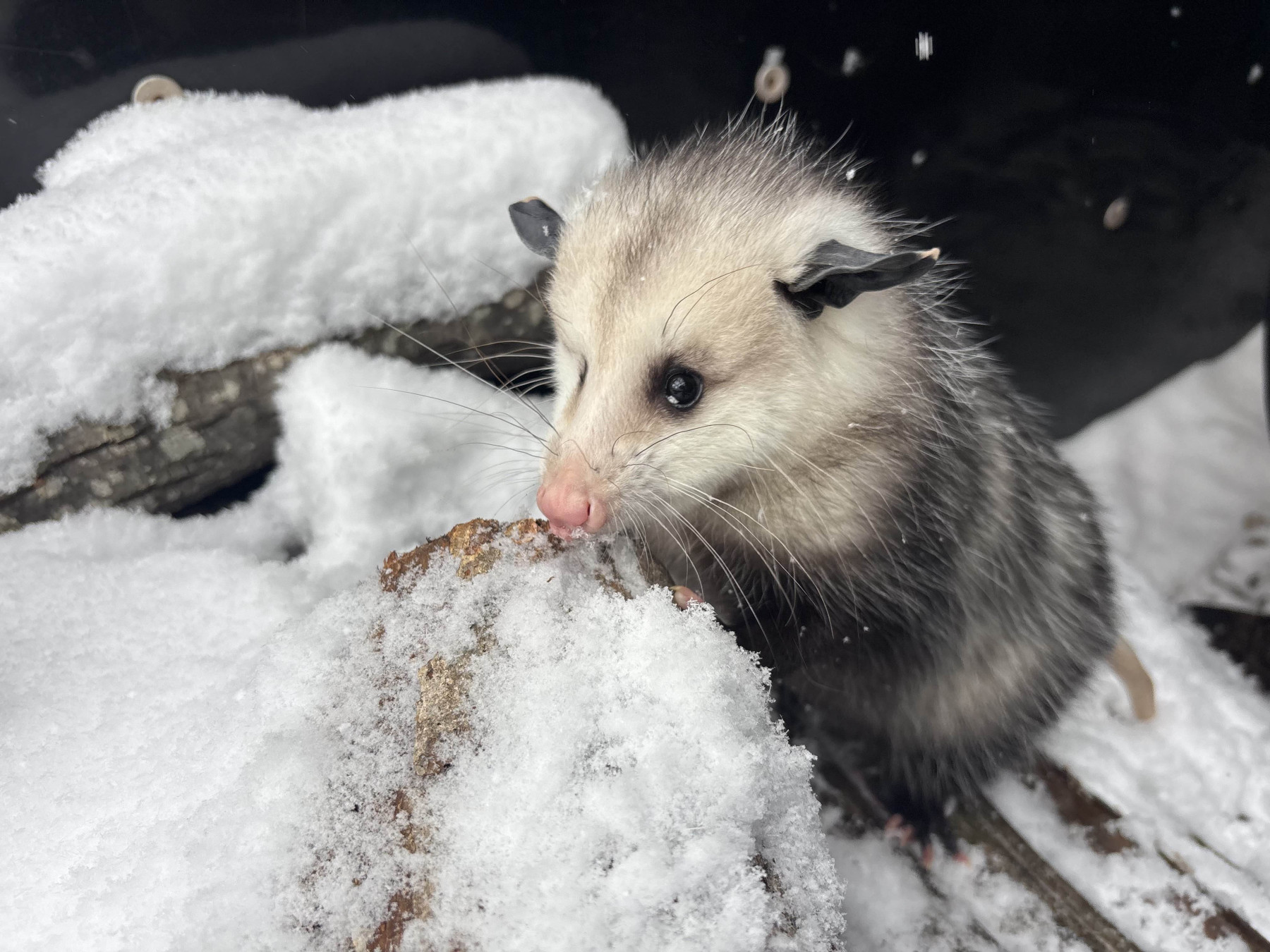
Three days a week, I get the pleasure of visiting Lucy in her enclosure for cleaning and feeding. Her injuries left her with a missing eye and slightly misaligned jaw, but her spirits do not seem dampened one bit. She enjoys sniffing her way around her enclosure, collecting leaves for her bed, and eating all the meals we provide (her favorite is mice and eggs!). I look forward to the time when she will begin accompanying our Outreach Team on programs, reaching more of the public to share her story of resilience and recovery. And I can't wait to see what the next year brings for her.
— Ashley Showalter, Front Desk Coordinator